
Friday, September 5, 2025
- Sep 4, 2025
- 5 min read
Alaska
Salmon focus of annual KRSA roundtable
Discussions centered on the decline of the species in the Kenai River and across the state.
Homer News by Jacob Dye - September 3, 2025
King salmon were in the spotlight last month at the annual Kenai Classic Roundtable, which centered on the decline of the species in the Kenai River and across the state.
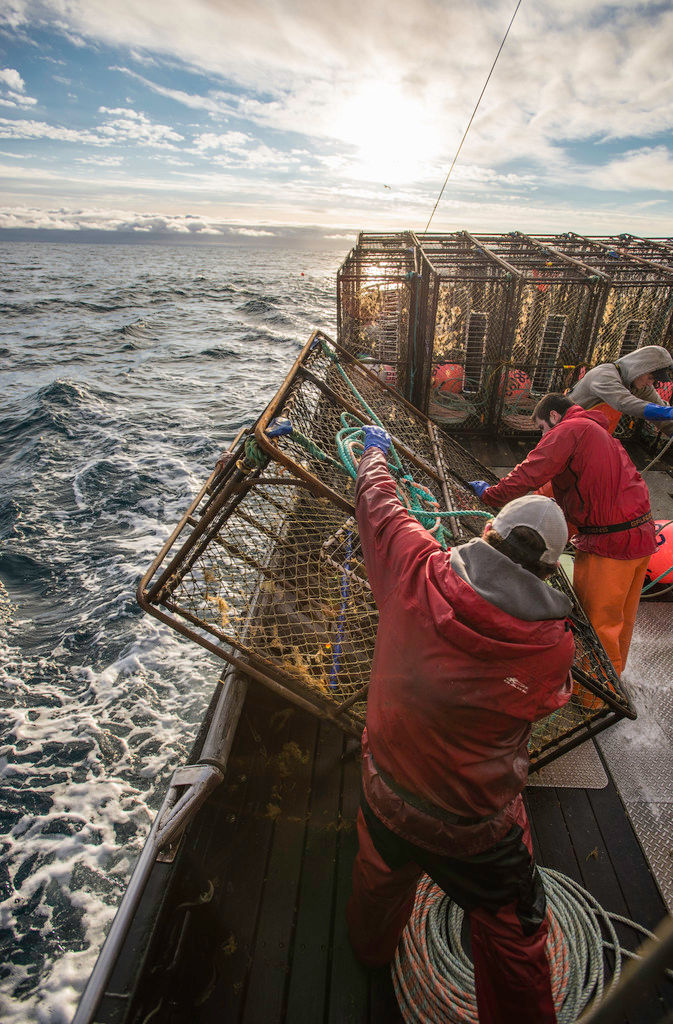
SE Alaska Red King Crab Season Opens November 1, Thanks to New Board of Fish Policy
SeafoodNews.com by Peggy Parker - September 4, 2025
Crab fishermen in Southeast Alaska will have an opportunity to begin harvesting highly sought-after red king crab this fall due to a significant policy shift in management approved by the state last February. The change allows a fishery to open under new management rules even if surveys show that the available biomass is less than the long-standing minimum threshold of 200,000 lbs. The announcement from Alaska's Department of Fish and Game (ADF&G) is for a regionwide guideline harvest level (GHL) is 211,573 pounds. Late next week, details regarding fishery areas, gear requirements, and the distribution of the GHL are expected. The 200,000-pound threshold was established on a temporary basis in 2002, when the previous threshold of 300,000 pounds was lowered. It was made permanent in 2005. This threshold had resulted in only three commercial red king crab seasons in the region over the past two decades. The season has been closed since 2018. Expana's Managing Editor, Seafood, Janice Schreiber, noted that any additional volume entering the king crab sector would be welcomed, as the market continues to operate at all-time highs throughout the year. "Supplies remain thin and are limited to Norway, Japan, and the US, as Russian product, the largest source globally, remains banned from the US market," Schreiber explained. "Strong and consistent demand, coupled with ongoing tight availability, is supporting firm pricing across all sizes." Schreiber added that 6-9 count Norwegian red king crab is currently quoted at $80.00–$83.00 per pound—approximately 60 percent higher than at this time last year. This sustained pricing strength reflects continued persistent upward pressure and a market that remains full steady to firm.Last February, a proposal to the Board of Fish, submitted by the Alaska Department of Fish and Game following intense collaboration with harvesters and processors, was passed. This allowed for a new management regime that protected the resource and permitted small, local harvests.During the Board of Fish two-week-long meeting, Nels Evens, Executive Director of the Petersburg Vessel Owners' Association, emphasized that this threshold was not biologically necessary but was established due to past market demands.In scenarios where the threshold is below 200,000 pounds, according to the new regulation, permit holders are assigned individual catch limits (ICLs) based on the amount of crab that can be fished. Department officials said it’s a management tool, and there’s still a chance the fishery closes before a permit holder has taken their full ICL, according to coverage of the decision by KFSK at the time. The new biologically based harvest strategy doesn’t guarantee a set amount of red king crab harvest every year.“Looking back over the history, if this was implemented, it would’ve opened the fishery, I believe, twice [more] in the last 20 years,” Adam Messmer, Fish and Game’s lead shellfish biologist for the region, told KSFK. “It’s not going to make it a free-for-all. This isn’t going to be something that happens every single year. It would add a very minute amount of opportunity.”The last time the season opened in 2017, fishermen caught about 120,000 pounds, worth around $1.3 million at the docks.
Alaska Salmon Landings Now at 84 Percent of Forecast, Due to Lower Pink and Chum Harvests
SeafoodNews.com by Peggy Parker - September 5, 2025
In an odd but true moment, the only species of Alaska salmon that is currently exceeding pre-season predictions is the extremely scarce Alaska Chinook salmon. As of earlier this week, Chinook landings statewide were nearly 15% above forecasts of 165,000 fish. Total landings as of September 2 were 180 million fish, compared to a pre-season estimate of 214 million.Actual landings include 52.06 million pounds of sockeye, less than .9 million pounds of the 52.9 million predicted; so far, 109.6 million pink salmon have been landed, shy of the forecast of 138.4 million statewide; and chum salmon landings are 17.08 million fish, compared to 20.8 million expected.Coho salmon harvest forecast is 2.36 million, with a little more than half — 1.75 million cohos — landed so far. The statewide landings indicate a slightly early return, so the final numbers may exceed forecasts for coho.Fishing in Prince William Sound and Southeast Alaska for pink and chum salmon is past the peak, but still open in some areas. The Southeast Alaska (SEAK) pink salmon harvest in 2025 was predicted to be “average” at 29 million fish, slightly above the recent 10-year average harvest of 26 million but approximately 60% of the parent-year (2023) harvest of 48 million.The latest inseason harvest estimate produced last Monday, August 11, is for a harvest of 23.2 million pink salmon. This a reduction from prior week’s forecast and given run timing and harvest from the most recent opening, this reduced estimate may difficult to achieve, note salmon management biologist from Southeast. The current landings are now at 19.6 million pinks. Total chum salmon landings to date in Southeast Alaska are 9.6 million salmon.The total 2025 pink salmon run forecast for PWS is 66.70 million fish, with a potential commercial harvest of 56.12 million. Current landings there are reported at 41.7 million pinks. Chum salmon is expected to make up a smaller proportion of the PWS purse seine harvest, with the current total landed of 4.6 million chums.Cook Inlet’s landings are coming in higher across all species except pink salmon. Landings for sockeye are at 4.1 million, more than double last year’s harvest; pinks landings are at 418,000 salmon, compared to 2.5 million last year; and chums are at 111,000 compared to 68,000 chums landed last year. Coho are showing up at 109,000 so far, 8 times larger than the 14,000 landed last year.Landings in all areas have been decreasing for several weeks, with the exception of coho, which peaked last week and is only showing a slight downturn so far this week.
Waters near Kodiak close as vessel dumps thousands of gallons of diesel
Officials estimate up to 3,500 gallons of diesel spilled after the F/V Sea Ern ran aground in Izhut Bay
Alaska's News Source by Lars Hanson - September 3, 2025
ANCHORAGE, Alaska (KTUU) - A commercial fishing vessel ran aground in Izhut Bay off Afognak Island this week, puncturing its fuel tanks and spilling an estimated 3,000 to 3,500 gallons of diesel, according to the Alaska Department of Environmental Conservation (DEC).
Study reinforces climate change will cause challenges for managing shared fishing stocks
Seafood Source by Chris Chase - September 5, 2025
A recently published study has reiterated the long-discussed issue of climate change causing changes in distribution of marine species – which is putting strain on managing shared fishing stocks.
*Requires Subscription
Pacific Seafood Processors Association
4039 21st Ave. W, Suite 400, Seattle, WA 98199
Phone: 206.281.1667
E-mail: admin@pspafish.net; Website: www.pspafish.net
Our office days/hours are Monday-Friday8:00 A.M. - 5:00 P.M.
In accordance with Title 17 U.S.C. Section 107, any copyrighted work in this message is distributed under fair use without profit or payment to those who have expressed a prior interest in receiving this information for non-profit research and educational purposes only. *Inclusion of a news article, report, or other document in this email does not imply PSPA support or endorsement of the information or opinion expressed in the document.


Comments