
Monday, August 3, 2026
- Aug 3
- 5 min read
Alaska
Metlakatla Indian Community awarded over $16M for fish hatchery improvements
KRBD by Sydney Dauphinais - July 31, 2026
The Metlakatla Indian Community received over $16 million from the federal government to increase salmon hatchery production.
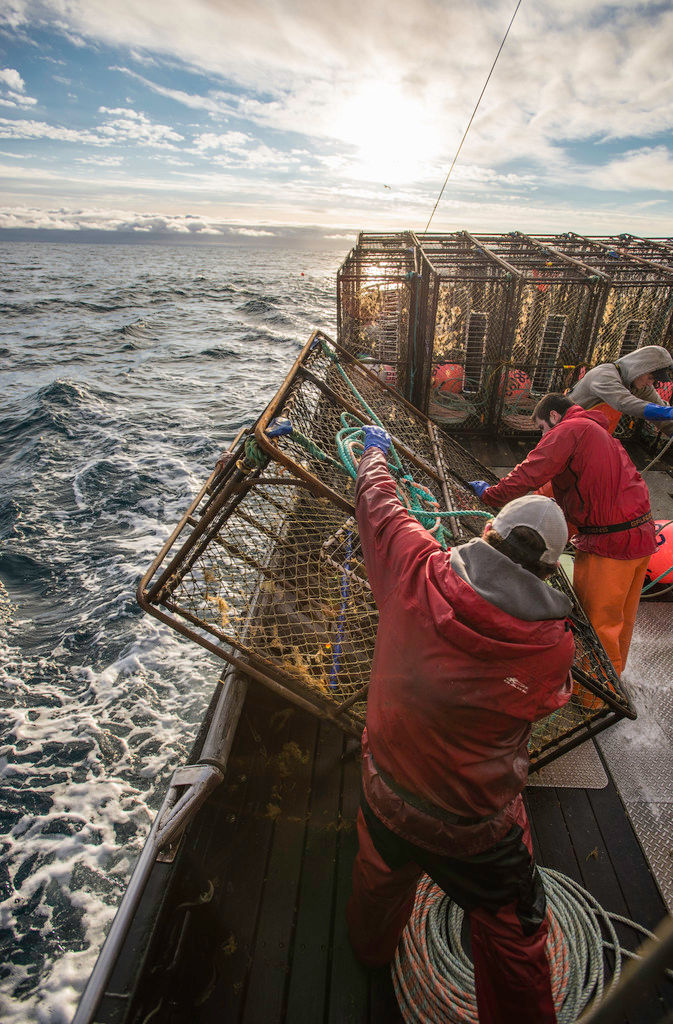
Low catches close Southeast commercial Dungeness crab season three weeks early
KFSK by Taylor Heckart - July 31, 2026
Southeast Alaska’s commercial Dungeness crab summer season ended three weeks early, on July 25.
Beluga whales absent from Kenai River during peak fishing season
Homer News by Alexander Vaz - July 31, 2026
Endangered Cook Inlet beluga whales have been absent during times of high human activity in a recent two-year period, according to recent data — a time in which they have traditionally fed in the salmon-rich Kenai River.
*Requires Subscription
West Coast
3MMI - Mid-Summer Salmon Update | Alaska Leads. B.C. Weakens. Markets Stay Tight.
Tradex Foods - August 3, 2026
The 2026 wild salmon season is increasingly becoming a story of regional divergence.
International
Federal Government Signals Potential Changes to Seafood Import Monitoring Program
SeafoodNews by Ryan Doyle - August 3, 2026
The US National Marine Fisheries Service has placed a new rulemaking on the federal government's Unified Agenda that could bring meaningful changes to the Seafood Import Monitoring Program (SIMP), the documentation and traceability system that governs how imported seafood enters the US market. The listing, published July 5 under RIN 0648-BK85, represents the earliest official signal that the agency intends to develop new rules.
The Unified Agenda is the federal government's semiannual roadmap of planned regulatory actions. Its publication does not mean a rule is imminent — any meaningful changes would still require a multitude of steps before changes are put in place.
According to the agenda, proposed changes could include clarifying what qualifies as a legitimate US business address for holders of an international fisheries trade permit, and tightening the definition of what constitutes a qualifying US business presence. NMFS is also considering revising permit holders' responsibilities for maintaining and producing supply chain records during agency audits, with the goal of requiring importers to produce documentation more quickly if a shipment is selected for review.
Additionally, NMFS may seek to require importers to keep more records or provide more information to US authorities than currently required, though the agency noted the added burden would be modest given that much of the documentation is already produced as part of standard import processes.
"US seafood importers may be affected by this rulemaking through increased reporting and recordkeeping requirements, but NMFS estimates the economic impact will be small because documentation is already completed, transmitted through the supply chain, and available to importers," NMFS wrote in the agenda posting.
NMFS also said it is considering changes to the species covered by SIMP "if they are necessary to improve the program." At present, SIMP covers 13 specific species groups representing more than 1,100 unique marine species, including Atlantic cod, blue crab, mahi mahi, Pacific cod, and multiple orders of shrimp and tuna. Any expansion of that list would reopen a long-running debate between importers, domestic harvesters, and environmental groups over the program's scope and compliance burden.
The proposal comes in response to President Trump's executive order 14276, signed in April 2025, directing NOAA to reduce what it characterized as overly burdensome regulations on US seafood, promote domestic production, and more aggressively regulate imports.
A Broader Moment for Seafood Import Policy
The SIMP rulemaking notice lands at an unusually active moment for US seafood import regulation more broadly. Just days earlier, on July 29, NOAA published a separate advance notice of proposed rulemaking — also open for public comment through September 28 — seeking input on a potential overhaul of the Marine Mammal Protection Act's comparability finding framework, the mechanism that determines which foreign fisheries can legally export seafood to the US market.
As Expana has reported, that MMPA review comes directly out of the program's turbulent first year of full enforcement, which saw import bans hit 240 fisheries across 46 countries, triggered a successful industry lawsuit that resulted in a court-ordered reconsideration, and ultimately left the Philippines and Venezuela locked out of the US blue crab market while Vietnam, Indonesia, and Sri Lanka were restored. Simultaneously, NOAA is also facing pressure to rescind some of those restrictions, adding another layer of complexity to an already unsettled regulatory picture.
The two rulemakings are procedurally distinct — SIMP governs import documentation and traceability, while the MMPA framework governs which fisheries are legally permitted to export to the US at all. But for seafood importers, they operate in tandem. A country that achieves MMPA compliance still faces SIMP documentation requirements at the border, and any tightening of those requirements adds compliance cost on top of an already elevated tariff and regulatory burden.
The MMPA ANPR comment deadline is September 28, 2026. Comments can be submitted at regulations.gov using docket number NOAA-NMFS-2026-0826. The SIMP rulemaking remains pre-decisional, with no proposed rule published yet.
Environment/Science
Infamous Japanese whaler/research vessel makes Kodiak stop
Kodiak Daily Mirror by Steve Williams - July 31, 2026
The Japanese whale catcher Yushin Maru No. 2 made a stop in Kodiak Thursday.
*Requires Subscription
Labeling and Marketing
US consumers buying less beef, shifting to seafood, other proteins instead
SeafoodSource by Christine Blank - July 31, 2026
Over half of Americans are buying less beef or have stopped buying it entirely due to high prices, according to supply chain management firm Blue Yonder’s 2026 Consumer Grocery and Protein Trends survey.
*Requires Subscription
US gov’t ‘Real Food’ show highlights Alaska salmon, affordability and America’s seafood gap
RFK Jr.'s new cooking series promotes the updated dietary guidelines that urge Americans to eat three or more servings of seafood a week.
Intrafish by Rachel Sapin - July 31, 2026
U.S. Health and Human Services Secretary Robert F. Kennedy Jr. has debuted The Real Food Show, a new federal cooking series aimed at helping Americans prepare what the agency describes as healthy and affordable meals at home — with seafood taking a starring role.
*Requires Subscription
Pacific Seafood Processors Association
4039 21st Ave. W, Suite 400, Seattle, WA 98199
Phone: 206.281.1667
E-mail: admin@pspafish.net; Website: www.pspafish.net
Our office days/hours are Monday-Friday
8:00 A.M. - 5:00 P.M.
In accordance with Title 17 U.S.C. Section 107, any copyrighted work in this message is distributed under fair use without profit or payment to those who have expressed a prior interest in receiving this information for non-profit research and educational purposes only. *Inclusion of a news article, report, or other document in this email does not imply PSPA support or endorsement of the information or opinion expressed in the document.


Comments