
Wednesday, April 29, 2026
- Apr 29
- 4 min read
Alaska
Higher temperatures spur Alaska’s invasive pike to eat more, a bad sign for salmon
A University of Alaska Fairbanks study focusing on the Deshka River found that the predators have become even more voracious as the climate has warmed
Alaska Beacon by Yereth Rosen - April 28, 2026
An invasive northern pike is shown to have its stomach stuffed with tiny juvenile salmon. Invasive northern pike are well-established on the Deshka River, where they are eating their way through the supply of salmon and other fish.
‘Death by a thousand cuts’: Salmon fleet blames Alaska board for deepening crisis
Fishermen across Alaska feel a growing nervousness about the Board of Fisheries’ power over their livelihoods.
Intrafish by Rachel Sapin - April 29, 2026
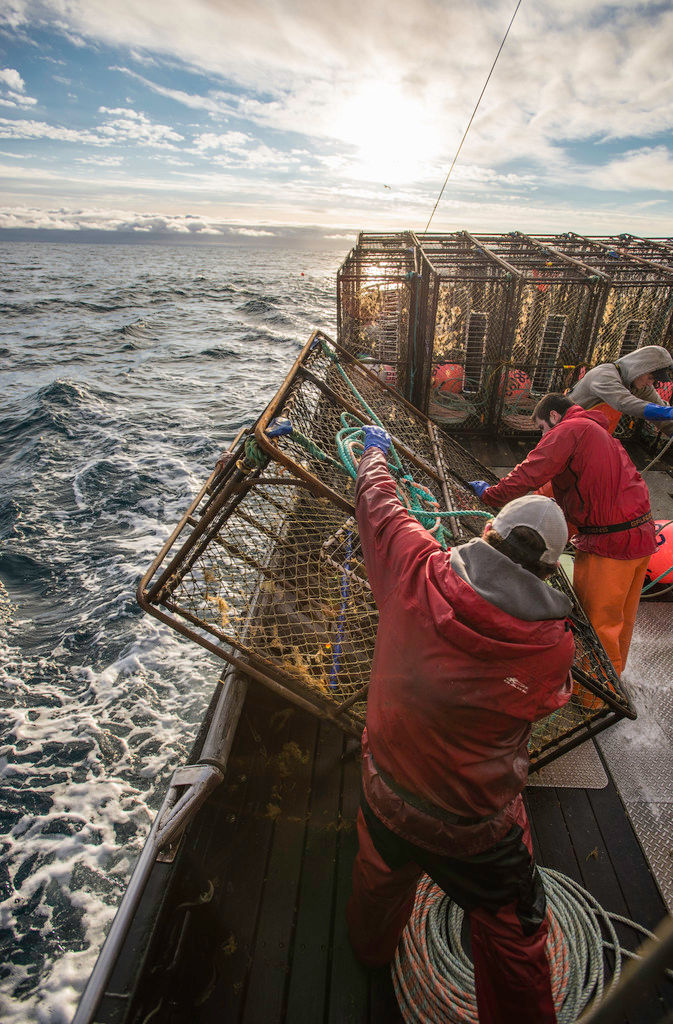
Brian Gabriel has been a Cook Inlet set gillnetter in Alaska for nearly four decades, fishing with his wife, Lisa, since 1987. He first setnetted in 1976 at age 15.
*Requires Subscription
Proposed NOAA Budget Cuts Face Bipartisan Congressional Resistance
SeafoodNews by Ryan Doyle - April 29, 2026
Bipartisan congressional leaders are mounting opposition to the Trump administration's proposed $1.6 billion reduction to NOAA's budget for fiscal year 2027, expressing particular concern about cuts that could severely impact fisheries management and oversight of marine commerce.
The $4.54 billion budget request represents a significant reduction from current funding levels, including proposed cuts of more than 40% to the National Marine Fisheries Service and nearly 60% to the National Ocean Service. The reductions have drawn criticism from both Republican and Democratic lawmakers during an April 28 House Science, Space and Technology Committee hearing.
Rep. Brian Babin (R-TX), who chairs the House Science, Space and Technology Committee, said the proposed cuts were not likely to garner congressional support, noting that Congress rejected similar proposals in fiscal year 2026.
"The enacted levels in the FY26 appropriations package signaled that Congress did not support the proposed direction for NOAA," Babin said during the hearing.
The proposed cuts to NMFS raise questions about the agency's ability to conduct essential stock assessments and manage commercial fishing quotas that prevent overfishing. NOAA Administrator Dr. Neil Jacobs acknowledged during testimony that the budget involves "tradeoffs" with "more risk accepted on the basic research side."
The nearly 60% reduction to the National Ocean Service could impact ocean data and navigation tools critical to shipping companies and ports, potentially affecting the broader maritime economy that supports more than one-third of US GDP, according to congressional testimony.
"NOAA's research activities are essential to its mission of protecting life and property," Babin stated. "NOAA does not have the budget of some larger agencies, so it needs focused operational offices to provide the products and services that are vital to this country's safety and economic prosperity."
Rep. Christian Menefee (D-TX) questioned how critical services would operate without "the foundational science" provided by NOAA researchers. "I don't want the city I represent to pay the price," he said during the hearing.
Despite the overall reductions, the budget includes targeted increases for seafood industry priorities. NOAA is requesting $5 million for essential fisheries stock surveys and modernizing data collection using emerging technologies like autonomous underwater vehicles and environmental DNA.
An additional $9.43 million is proposed for the "America First Seafood Strategy," including seafood traceability initiatives, aquaculture expansion, and increased capacity for inspecting imported fish products.
The budget also proposes transferring Endangered Species Act and Marine Mammal Protection Act functions from NMFS to the US Fish and Wildlife Service, which NOAA says would "reduce regulatory burden on American citizens and industry."
Subcommittee Chairman Scott Franklin (R-FL) offered more measured support for certain aspects, particularly commercial data partnerships, but emphasized Congress's commitment to NOAA's "core mission of protecting lives and property."
Franklin praised proposed investments in commercial partnerships and autonomous research capabilities, noting they could "supplement and even improve data inventory by partnering with industry."
Administrator Jacobs emphasized expanding commercial partnerships, particularly for satellite data and ocean monitoring services. "NOAA will continue to expand the use of commercially available cost-effective data and services, where they meet NOAA mission needs," he testified.
The House Appropriations Committee is expected to mark up its version of NOAA funding this week, but comments made during the hearing indicate it will likely reject the administration's proposed reductions, as it did for fiscal year 2026.
Babin concluded his opening remarks by stating, "I want to thank the Administrator for being here to discuss with the Committee what NOAA’s priorities should be, and I hope we can find a workable path forward that best serves the American people."
National
US lawmakers attempt to attach several seafood amendments to Farm Bill
SeafoodSource by Nathan Strout - April 28, 2026
U.S. lawmakers are pushing to attach several seafood amendments to the forthcoming Farm Bill renewal as part of an ongoing effort to grow the seafood industry’s presence within the U.S. Department of Agriculture (USDA).
*Requires Subscription
International
EU pollock processors, Russian suppliers meet in Barcelona to discuss EU license ‘crisis’
EU pollock buyers billed the situation as a 'crisis' during the SEG show, where prices for fillet blocks are rocketing and lower volumes are available for the European market
Undercurrent News by Tom Seaman - April 28, 2026
Large European pollock processors met with suppliers during Seafood Expo Global (SEG) to discuss the deepening crisis being caused by the lack of EU import numbers for new and refitted Russian vessels and plants, sources told Undercurrent.
*Requires Subscription
Environment/Science
Low-carbon messaging that actually makes sense on the dock
National Fisherman by Carli Stewart - April 27, 2026
When conversations turn into low-carbon seafood, many fishermen hear a language that doesn’t belong to them. It sounds abstract, political, or designed for someone else entirely.
*Requires Subscription
Pacific Seafood Processors Association
4039 21st Ave. W, Suite 400, Seattle, WA 98199
Phone: 206.281.1667
E-mail: admin@pspafish.net; Website: www.pspafish.net
Our office days/hours are Monday-Friday
8:00 A.M. - 5:00 P.M.
In accordance with Title 17 U.S.C. Section 107, any copyrighted work in this message is distributed under fair use without profit or payment to those who have expressed a prior interest in receiving this information for non-profit research and educational purposes only. *Inclusion of a news article, report, or other document in this email does not imply PSPA support or endorsement of the information or opinion expressed in the document.


Comments