
Monday, December 8, 2025
- Dec 8, 2025
- 6 min read
Updated: Jan 17
Alaska
Unalaska takes Pribilof Island’s king crab deliveries after processor breaks down
KUCB by Maggie Nelson - December 1, 2025
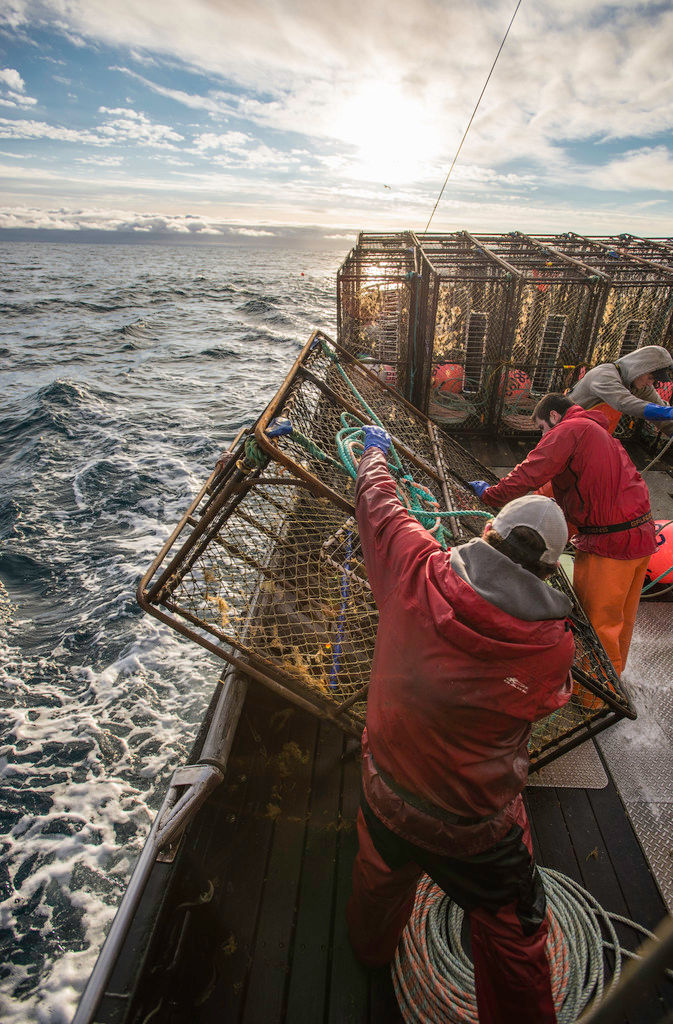
A portion of the lucrative Bristol Bay red king crab harvest nearly went to waste this season, after a catcher processor that was set to take the crab was forced to shut down.
Pacific Halibut Stock Assessment at End of 2025 Shows Continued Trend of Low Productivity
SeafoodNews by Peggy Parker - December 5, 2025
The annual stock assessment of Pacific halibut, the world’s largest flatfish, reveals little change in the biomass of the stock that ranges from Alaska’s northern Bering Sea to California's Monterey Bay. Commercial landings in 2025 as of December 1 were 16.7 million lbs., down 16% from that time last year. This year, that reflected only about 80% of the catch limit allowed in 2025. Total mortality was 28.8 mlbs, down 12% from last year, and marks the lowest in 100 years.
The trend has been sobering for stakeholders and fisheries managers for nearly ten years, some years going slightly up, some years down. Historically, the species may be the most consistently studied fish in the world, with landings data going back more than a century. The fish are long-lived and more adaptable than most species. The fishery is currently in a “not overfished” condition, with no overfishing happening. The most recent decline is likely due to two dynamics — a loss of weight at age and a lack of recruitment. Weight at age means how much a fish weighs at a certain age. Fifty years ago, 16-year-old female halibut weighed an average of 75 lbs. Today, that same-aged fish weighs less than 30 lbs.
The report released yesterday at the International Pacific Halibut Commission’s (IPHC) Interim Meeting also indicated that female halibut are becoming sexually mature at slightly earlier ages than historical averages. What this means for total catch limits for the 2026 season won’t be determined until the IPHC’s Annual Meeting in Bellevue, WA that last week in January.
There, stakeholders from all ten regulatory areas will meet with U.S. and Canadian commissioners and the IPHC staff to decide how much fish can be removed from the water without harming the sustainability of the stock. For more information and to register for the meeting, visit https://www.iphc.int/upcoming-meetings/.
The next season opening will be announced in late January, but it has usually been in late March or early April.
West Coast
3MMI - Wild Halibut Season Over: Market to Face Tightest Winter Yet
Tradex Foods - December 8, 2025
The Pacific Halibut fishery officially closed on December 7th, leaving the market without new supply until mid-March and forcing buyers to rely entirely on what little inventory remains.
Commercial crab season begins Dec. 16 from Cape Falcon to the California border
Oregon Department of Fish & Wildlife - December 5, 2025
Newport, Ore. – Oregon's commercial Dungeness crab season opens Dec. 16 from Cape Falcon to the California border, the Oregon Department of Fish and Wildlife announced today. Crab will be available in time for the holiday season.
National
US House committee approves Stop Illegal Fishing Act
SeafoodSource by Nathan Strout - December 5, 2025
The U.S. House Foreign Affairs Committee has approved the Stop Illegal Fishing Act, legislation that authorizes U.S. President Donald Trump to impose sanctions on foreign individuals and vessels that engage in illegal, unreported, and unregulated fishing (IUU) fishing.
https://www.seafoodsource.com/news/supply-trade/us-house-committee-approves-stop-illegal-fishing-act
*Requires Subscription
International
Japan: Imports of Frozen Alaskan Salmon Roe Doubled to 3,184 Tons, Russian Roe Minimal
SeafoodNews by Tom Asakawa - December 4, 2025
According to a Minato Shimbun report, imported frozen salmon roe is selling at unusually high prices this season. The domestic sales price for Russian pink and chum salmon roe has exceeded 10,000 yen/kg ($64.34/kg). This is even higher than last season's steep price hike, and there have been almost no imports up to September. Imports from the United States are on the rise.
The domestic sales price for frozen Russian roe from the latest season in November was "hovering around 10,000 yen/kg ($64.34/kg), about 2,000 yen ($12.87) higher than last year," according to a trading company source. Russia's salmon catches have been halved this year.
"Their salmon roe is being consumed domestically in Russia, and only a small amount is being shipped to Japan," they say.
Chum roe is selling for about 1,000 yen/kg ($6,43/kg) more than pink roe, with a trading company source saying, "In November, the sales price for Russian roe was 10,000 to 11,000 yen/kg ($64.34-70.74/kg)." Last year, it was in the 8,000 yen ($51.45/kg) range. This is roughly double the price from the year before (around 5,000 yen).
Meanwhile, demand for sockeye roe has been on the rise in recent years due to the high prices of pink and chum roe, and the domestic sales price for Alaskan sockeye roe this season is around 2,500 yen/kg ($16.08/kg). Although prices are trending higher than last season, import volume to Japan has increased significantly.
According to trade statistics from the Ministry of Finance, the volume of frozen salmon roe imported from the United States this season (July to September) is 3,184 tons, double the volume from the same period last year.
Environment/Science
Snow Crab Collapse Linked to Energetic Limitations During a Marine Heatwave
NOAA - December 5, 2025
New study provides critical insights into the Bering Sea snow crab population collapse in 2018–2019, offers hope for recovery, and provides a new tool for fisheries management.
A new study addresses one of the largest mass mortality events in recent marine history—the abrupt collapse of the snow crab population in the eastern Bering Sea.
Alaska-based research vessel embarks for Antarctica
Cordova Times by Margaret Bauman - December 3, 2025
A National Science Foundation (NSF) research vessel based in Southcentral Alaska is headed for Antarctica to conduct research projects into an ancient mass extinction event, summer sea ice, and the ecology of the ocean bottom.
Federal Register
Fisheries of the Exclusive Economic Zone Off Alaska; Demersal Shelf Rockfish in the Western, Central, and West Yakutat Regulatory Areas of the Gulf of Alaska
A Rule by the National Oceanic and Atmospheric Administration on 12/05/2025
NMFS is prohibiting retention of demersal shelf rockfish in the Western, Central, and West Yakutat Regulatory Areas of the Gulf of Alaska (GOA).
Fisheries of the Exclusive Economic Zone Off Alaska; Pacific Ocean Perch in the Bering Sea Subarea of the Bering Sea and Aleutian Islands Management Area
A Rule by the National Oceanic and Atmospheric Administration on 12/05/2025
NMFS is prohibiting directed fishing for Pacific Ocean perch in the Bering Sea subarea of the Bering Sea and Aleutian Islands management area (BSAI).
Fisheries of the Exclusive Economic Zone Off Alaska; Reallocation of Pacific Cod in the Bering Sea and Aleutian Islands Management Area
A Rule by the National Oceanic and Atmospheric Administration on 12/05/2025
NMFS is reallocating the projected unused amount of Pacific cod from catcher vessels greater than or equal to 60 feet (18.3 meters (m)) length overall (LOA) using pot gear to catcher/processors using pot gear in the Bering Sea and Aleutian Islands management area (BSAI).
https://www.federalregister.gov/documents/2025/12/05/2025-22107/fisheries-of-the-exclusive-economic-zone-off-alaska-reallocation-of-pacific-cod-in-the-bering-sea
Fisheries of the Exclusive Economic Zone Off Alaska; Reapportionment of Halibut Prohibited Species Catch Limits in the Bering Sea and Aleutian Islands Management Area
A Rule by the National Oceanic and Atmospheric Administration on 12/05/2025
NMFS is reapportioning the unused amounts of Pacific cod Trawl Cooperative (PCTC) Program halibut prohibited species catch (PSC) limits to the Pacific cod limited access trawl catcher vessel sector C season in the Bering Sea and Aleutian Islands management area (BSAI).
Fisheries of the Exclusive Economic Zone Off Alaska; Bering Sea and Aleutian Islands Management Area; Cost Recovery Fee Notice for the Western Alaska Community Development Quota and Trawl Limited Access Privilege Programs
A Notice by the National Oceanic and Atmospheric Administration on 12/05/2025
NMFS publishes standard prices and fee percentages for cost recovery for the Amendment 80 Program, the American Fisheries Act (AFA) Program, the Aleutian Islands Pollock (AIP) Program, and the Western Alaska Community Development Quota (CDQ) Program in the Bering Sea Aleutian Islands (BSAI) management area.
Agency Information Collection Activities; Submission to the Office of Management and Budget (OMB) for Review and Approval; Comment Request; Groundfish Trawl Catcher Processor Economic Data Report (EDR)
A Notice by the National Oceanic and Atmospheric Administration on 12/05/2025
The Department of Commerce will submit the following information collection request to the Office of Management and Budget (OMB) for review and clearance in accordance with the Paperwork Reduction Act of 1995, on or after the date of publication of this notice.
Pacific Seafood Processors Association
4039 21st Ave. W, Suite 400, Seattle, WA 98199
Phone: 206.281.1667
E-mail: admin@pspafish.net; Website: www.pspafish.net
Our office days/hours are Monday-Friday
8:00 A.M. - 5:00 P.M.
In accordance with Title 17 U.S.C. Section 107, any copyrighted work in this message is distributed under fair use without profit or payment to those who have expressed a prior interest in receiving this information for non-profit research and educational purposes only. *Inclusion of a news article, report, or other document in this email does not imply PSPA support or endorsement of the information or opinion expressed in the document.


Comments