
Monday, March 23, 2026
- Mar 23
- 6 min read
Alaska
Better protections sought for salmon habitat in transboundary waters
National Fisherman by Margaret Bauman - March 23, 2026
Transboundary rivers flowing from Canada into Southeast Alaska yield harvests of millions of salmon with an annual value of over $225 million, an economic driver that fishermen contend needs further environmental protection.
*Requires Subscription
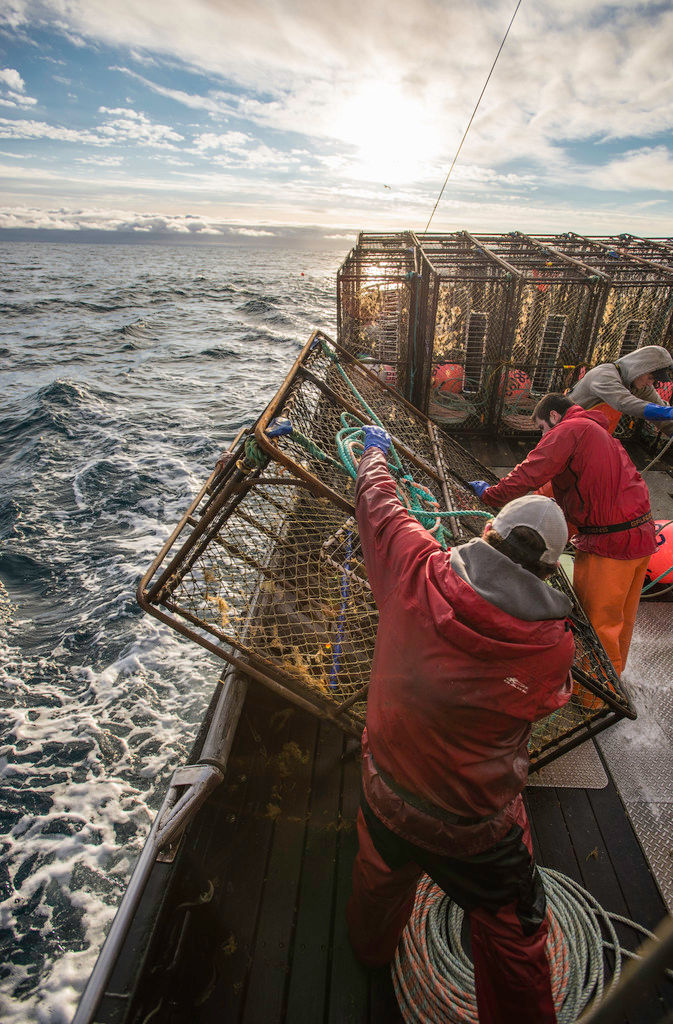
Southeast Alaska’s commercial Dungeness crab fisheries had below-average harvests with ‘decent’ prices in 2025-26 season
KFSK by Olivia Rose - March 20, 2026
The numbers are in for Southeast Alaska’s 2025-26 commercial Dungeness crab season. Participants harvested 2.07 million pounds of crab during the summer and fall/winter fisheries combined.
West Coast
AK, WA Governors Tap Two for NPFMC While NOAA Head Urges More Industry Members on Councils
SeafoodNews by Peggy Parker - March 23, 2026
Amid comments from NOAA Fisheries Assistant Administrator Eugenio Piñeiro Soler for “better council members” at the regional fisheries management councils, both Governors Mike Dunleavy of Alaska and Bob Ferguson of Washington submitted their preferred nominations for two seats on the North Pacific Fishery Management Council (NPFMC).
That council oversees 26 federally-managed species caught in Alaskan waters, including the nation’s largest fishery, Alaska pollock. Taken together, about 30% of the nation’s total seafood production is managed by the 11-member NPFMC.Dunleavy nominated Märit Carlson-Van Dort, the current chair of the Alaska Board of Fisheries, to replace Ryuichi “Rudy” Tsukada, CEO of the CDQ group Coastal Villages, after his first term expires this August.
Ferguson nominated Jamie Goen, an incumbent member of the North Council who is ending her first three-year term this August. Members may serve three terms, for a total of nine years, before being replaced.
Piñeiro Soler’s comments at the Seafood Exhibition North America (SENA) in Boston were critical of a few of the nation’s eight regional fisheries management councils after conference participants complained that commercial stakeholders are getting short shrift. The event was a listening session hosted by the Southeastern Fisheries Association, whose members rely on the resources managed by both the Gulf and South Atlantic Councils. Industry stakeholders in the audience raised issues with the NOAA director on the lack of industry representation on the New England council as well.Steven Rash of Florida-based Water Street Seafoods brought the issue up first, and Piñeiro Soler was quick to agree that there needed to be better representation on those councils, according to an article by SeafoodSource.
Earlier in his career, Piñeiro Soler served on federal councils and international commissions. He was chair of the Caribbean Fishery Management Council from 2001 to 2010, served on the International Commission for the Conservation of Atlantic Tunas, the International Whaling Commission, and the Marine Protected Area Federal Advisory Committee.
Piñeiro Soler was astonished that not one member of the Gulf Council is a commercial shrimper. “You have 17 members and don’t have one shrimper?,” he asked. “That cannot be. That is a travesty. But, it’s up to you to give me good candidates.”
He explained that the governors nominate candidates for the councils, and the federal government can only select members from the names it is given. The industry needs to pressure governors and work with them to nominate people from the commercial sector, he told the group, according to SeafoodSource.
“The stakeholders, the fishermen, they have to come up with the right person. My intention is to balance this whole thing,” Piñeiro Soler said.
Florida processor Rash begged to differ. “Unfortunately, it doesn’t work that way,” Rash responded. He accused Florida Governor Ron DeSantis of making nominations as political favors.
“I’ve seen people on the council who were furniture dealers,” he told Piñeiro Soler.
Piñeiro Soler responded that vets all the governors’ recommendations and assured Rash that he has some influence with Secretary Lutnick on who serves the fishery management councils.
“If I don’t like it, I won’t approve any,” Piñeiro Soler said. “If it’s a commercial seat, it has to be a commercial person.”
When Dunleavy and Ferguson sent their separate letters of recommendation to Lutnick, they offered three names each, with the governors' preferences for first, second, and third. For Ferguson, incumbent Jamie Goen of the Bering Sea Crabbers Association was his primary choice. Second was Chad See, Executive Director of the Freezer Longliner Coalition. Ferguson’s third choice was James Johnson, Executive Director of the Deep Sea Fisherman's Union of the Pacific, AFL-CIO, and Director with Eat on the Wild Side. All three are steeped in the industry, each with more than 20 years of service.
Dunleavy’s first preference to replace Tsukada is Märit Carlson-Van Dort, chair of the Alaska Board of Fisheries and an Alaska Native from the village of Chignik Bay. Carlson-Van Dort was raised in Southeast Alaska and along the southern Alaska Peninsula. She has had some commercial experience fishing for salmon, but no experience in the federally managed sphere. Second was Forrest Bowers, who is the Acting Director of the Alaska Department of Fish and Game, Commercial Fish Division and who has 28 years of experience as a manager and researcher. Third is Israel Peyton, former director of ADF&G’s Sport Fisheries Division, and current member of the Board of Fisheries. Carlson-Van Dort has been lauded for her work changing the public testimony protocol that makes it easier for Alaska Natives, particularly elders, to speak at BOF meetings. But her voting record and public comportment have created headwinds for her confirmation to the NPFMC.
United Fishermen of Alaska, Alaska’s largest commercial fishing organization, has opposed her appointment twice in the past. Last month she and Curtis Chamberlain, also a member of the BOF, were named in a complaint for conflict of interest. The Aleutian East Borough sent the complaint to the Alaska Attorney General that was signed by several tribal governments in the region.
In a statement issued after the complaint was filed, AEB explained that Carlson-Van Dort dismissed the conflict twice. “The conflict was never resolved. The Board voted anyway,” AEB said.
“What happened to Area M at the Board of Fisheries is what happens when politicians appoint board members who arrive at the meeting with their minds already made up. We asked them to use science to determine what tools should best be used to help the AYK chum returns. Instead, they have done nothing to help the stocks — just a repeat of board meetings over the past 40 years that will result in the continued decline of salmon returning to their systems,” said Mayor Alvin D. Osterback of the Aleutians East Borough.
“The State of Alaska needs to address the conflict of interest rules for this Board before they ruin other fisheries in the state while accomplishing nothing to stop the decline in the AYK systems. Area M loses and the AYK loses because the Board of Fisheries is failing Alaska’s fishermen and its fish. It’s a sad day for all fishermen and their communities.”
National
Major US cold storage provider adapts to help seafood deal with tariffs, Iran war
'Even our best efforts to manage those [increased shipping] flows can be challenged when customers send significant volumes at once' -- Bridgett Medwid, Lineage
Undercurrent News by Cliff White - March 20, 2026
The US' largest cold storage provider is feeling the heat from tariffs and the Iran war, and making changes to better serve seafood importers [...]
*Requires Subscription
International
3MMI - China Seafood Market Update: Pollock Surges, Cod Mixed, Salmon Tight
Tradex Foods - March 23, 2026
China’s seafood processing sector is recovering post-CNY, with tightening supply starting to outweigh slower demand. Pacific cod is strengthening, with raw material prices now reaching $9,000+/MT, alongside rising pollock markets, while Atlantic cod and haddock remain weak due to high inventories. Salmon and halibut are increasingly constrained, supporting firm prices and prompting early buying.
Russian scientists propose slight increase in pollock quota
Scientists at Russia’s leading fisheries institute have recommended a pollock quota of around 2.5 million metric tons for the 2027 fishing season, slightly higher than the total allowable catch (TAC) for 2026 set at 2.42 million metric tons.
Intrafish by Evgeny Vovchenko - March 22, 2026
The All-Russian Research Institute of Fisheries and Oceanography (VNIRO) issued its recommendations for public discussions, the first step toward a final TAC decision by the Russian government, which will be made in the autumn.
*Requires Subscription
Federal Register
Permanent Advisory Committee To Advise the U.S. Commissioners to the Western and Central Pacific Fisheries Commission; Meeting Announcement
A Notice by the National Oceanic and Atmospheric Administration on 03/23/2026
NMFS announces a public meeting of the Permanent Advisory Committee (PAC) to advise the U.S. Commissioners to the Commission for the Conservation and Management of Highly Migratory Fish Stocks in the Western and Central Pacific Ocean (WCPFC) on May 27, 2026.
Pacific Seafood Processors Association
4039 21st Ave. W, Suite 400, Seattle, WA 98199
Phone: 206.281.1667
E-mail: admin@pspafish.net; Website: www.pspafish.net
Our office days/hours are Monday-Friday
8:00 A.M. - 5:00 P.M.
In accordance with Title 17 U.S.C. Section 107, any copyrighted work in this message is distributed under fair use without profit or payment to those who have expressed a prior interest in receiving this information for non-profit research and educational purposes only. *Inclusion of a news article, report, or other document in this email does not imply PSPA support or endorsement of the information or opinion expressed in the document.


Comments