
Wednesday, September 23, 2026
Alaska
Southwest Alaska communities call for fact-based public discourse on fisheries
Joint resolution seeks to abate heated political rhetoric on fisheries policy, management, and operations
SWAMC Tidings by staff - September 21, 2026
On September 21, 2026, the Southwest Alaska Municipal Conference issued correspondence and Joint Resolution No. 2026-06-01, calling for informed, respectful, and fact-based discussion of Alaska fisheries issues throughout the remainder of the election cycle.
Saint Paul Island's Halibut Fleet Rebounds With Record Prices After Years of Disruption
SeafoodNews by Peggy Parker - September 23, 2026
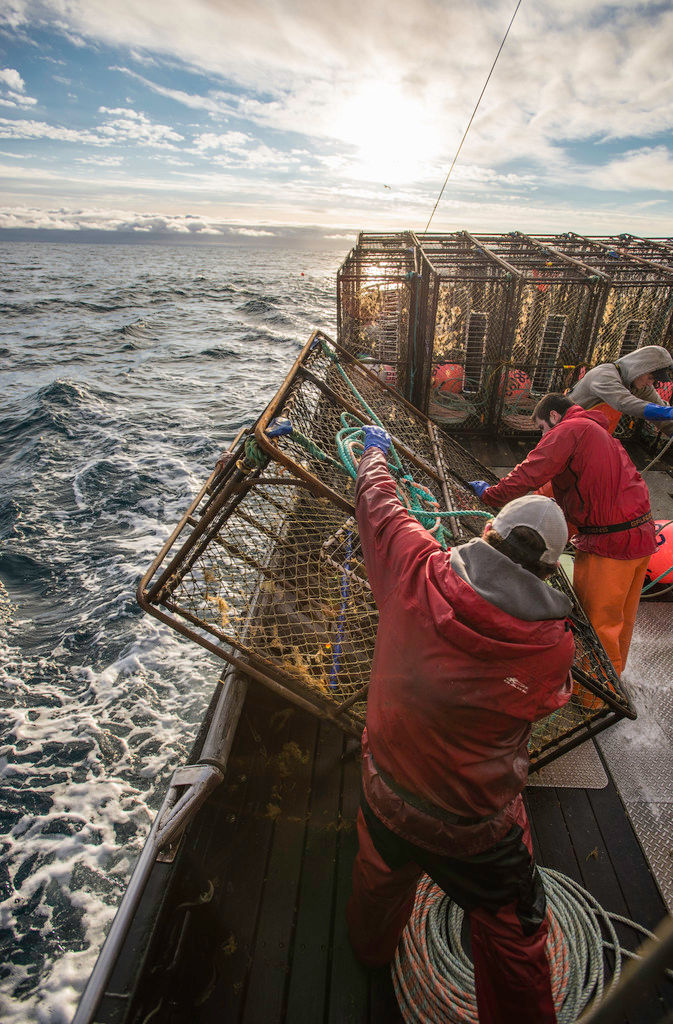
The residents of Saint Paul Island, located in the central Bering Sea, have much to celebrate this fall after a successful Pacific halibut season. It has been a time of change following a trifecta of disasters in the past six years. The Central Bering Sea Fishermen's Association (CBSFA), headquartered on the island and representing the community's fishing fleet, said the future today looks brighter than it has since 2019.
The disasters are well known in Alaska's seafood industry — COVID, the crab crash, and a slowly declining halibut resource — but few communities have been hit with all three at the same time and with no other fishery to fall back on. Saint Paul has no salmon runs, and no nearby urban areas to work.
So CBSFA, working with Trident Seafoods, local and federal agencies, found ways — in the short and long term — to get its fishermen members back out on the water and fish, which has kept the halibut fishery alive and, unlike crab, enduring for four decades. The halibut fishery began in the 1980s when the community phased out of the commercial fur seal harvest that had been the historic economic mainstay on the island.
When COVID hit Alaska, Saint Paul's fishermen opted to stand down and forego direct harvest. They were financially supported through CBSFA's Coronavirus Mitigation Payment Program. CBSFA's company-owned boats, the F/V Saint Paul and F/V Saint Peter, harvested CBSFA's community (CDQ) halibut quota as well as individual fishing quota (IFQ) held by local fishermen. CBSFA is the recipient of CDQ and would normally have distributed it to halibut fishermen to take their own boats out. The new arrangement during the pandemic kept the population healthy.
When the local Trident crab plant shut down in 2022 due to the sudden and almost complete loss of snow crab in the Bering Sea, it also shut down halibut processing.
In response, in 2024 CBSFA set up a tendering service and buying station at the Trident plant for the halibut fleet. The program provides bait, salt, ice, and the ability to make local landings.
For the last three seasons, Trident has provided support services to CBSFA through the use of its dock, cranes, totes, freezer vans, forklifts, and storage and power for CBSFA's ice machines. CBSFA employs a crew that handles deliveries and fish tickets, and provides transportation for the iced fish with the tender vessel Chagix (Unangan for "halibut") to the Trident processing plant in Akutan, some 240 nautical miles south in the Aleutians.
"I feel fortunate that CBSFA has the resources and personnel to make the local fishery happen for the community," noted CBSFA president Ray Melovidov.
"To provide our local fishermen with the opportunity to get out on the water and make a living from the ocean is really something special.
"In our fleet, we still have skippers who are pioneers of the local fishery — guys who have commercial fished from the very beginning, when the commercial fur seal harvest phased out. At the same time, we have greenhorns who have entered the fishery for the first time this season.
"I think having those generations fishing alongside each other speaks to the success of CBSFA's collective efforts and the opportunity that the marine resources around us provide," Melovidov said.
Both Melovidov and Jeff Kauffman, CBSFA vice president, acknowledged the important role Trident Seafoods has played in supporting Saint Paul's halibut fishery for decades. Prior to the crab crash, CBSFA partnered with Trident to custom process and market all the locally harvested halibut.
In addition to providing access to its halibut CDQ allocation for the local fleet to harvest, CBSFA provides full support to the local fleet. Through its subsidiary 170 Degrees West, CBSFA buys all locally caught halibut at market prices competitive with other Bering Sea buyers. The association also provides vessel support services to the local fleet, maintaining and installing the floating dock system in the Saint Paul Small Boat Harbor, providing launch and retrieval services with its cranes and boat trailers, and maintaining 24/7 security coverage in the Small Boat Harbor.
This support provides a secure foundation for local fishermen to invest in the local fishery. More Saint Paul fishermen are now participating and beginning to purchase Area 4C IFQ.
Pre-pandemic, local fishery participation included 14 vessels, employed around 75 individuals, and generated $2 million in ex-vessel value. Post-pandemic, participation in the local fishery had declined by about half.
But this season, participation increased to 9 vessels, and the fishery provided employment to over 50 individuals.
Record-high ex-vessel prices combined with good catch rates helped make this season a success. The fleet landed nearly 220,000 pounds of CDQ and IFQ, and was paid a record-high base price of $8 per pound, earning $1.75 million in ex-vessel value.
In addition, the F/V Saint Peter landed 122,000 pounds of CBSFA CDQ and locally owned IFQ, generating more than half a million dollars in lease fee revenues for CBSFA and quota holders.
Catch rates improved for the second year in a row, with anecdotal comments from local fishermen suggesting that fish were well distributed all around the island.
The success of the fleet translates to community well-being in a number of other ways. The local fishery provides taxes to the City of Saint Paul, amounting to about $60,000 in sales tax revenue this year, according to Melovidov.CBSFA also has an Elders & Community Subsistence Seafood Donation Program, through which every household in town receives seafood. CBSFA donates seafood to community events and fundraising activities.
"This is one of CBSFA's longstanding programs, with 2026 marking its 20th year of operating," Melovidov said. "This year, CBSFA has produced over 5,000 pounds of halibut portions, made from local fleet deliveries and produced and packaged by Trident Seafoods in Akutan.
"From that production, each household in the community will receive two 10-pound boxes of portions, and Elder households will receive three 10-pound boxes," he added.
The Tribal Government of St. Paul has recently begun an elder lunch program; CBSFA donated halibut portions to that program this year.
One of the long-term efforts CBSFA undertook to strengthen the island's economic health was working closely with the North Pacific Fishery Management Council to reduce bycatch. That effort led to significant actions taken by the council to reduce halibut bycatch from bottom trawlers in the Bering Sea. Over the last decade, the Amendment 80 bottom trawl fleet's PSC limit has dropped by 43%, and actual PSC use by that fleet has decreased by 41%.
This adds up to an average of about 2 million pounds of halibut per year that are not caught as bycatch but either continue to grow and replenish the population or nourish the residents of Saint Paul Island.
While halibut is a legacy industry in the Pribilofs, Saint Paul Island is opening doors to brand-new industries that will benefit the economy. Two are scientific research and tourism. The island welcomed the 50-foot research vessel Eventide last month and served as a destination for five cruise ships this summer.
International
Section 301 Tariffs Loom Over Seafood Trade as Trump-Xi Summit Opens This Week
SeafoodNews by Ryan Doyle - September 22, 2026
President Trump and Chinese President Xi Jinping are set to meet in Washington this week, and trade attorneys say the summit could determine the timeline for a new round of Section 301 tariffs on Chinese goods, with seafood importers among those watching closely.
New Tariff Tied to "Excess Capacity" Case
The administration has been developing a separate tariff action targeting China and roughly 15 other economies under a Section 301 investigation into "structural excess capacity." The rate under consideration is around 7.5%, according to trade-compliance publication FreightFigures, which cited Bloomberg and Inside US Trade reporting that the administration is expected to hold off announcing the tariff until after the Trump-Xi meeting.
If implemented, the tariff would stack on top of existing duties on Chinese goods rather than replace them.
Separate from that pending action, 178 existing Section 301 exclusions — covering products including Alaskan sole frozen in blocks, king crab meat, snow crab meat and other crab meat frozen in airtight containers — remain in effect only through Nov. 9, 2026. Those exclusions were extended last November as part of the broader Trump-Xi trade agreement reached at that time.
Nothing forces a decision on those exclusions this week. The November 9 deadline sits roughly seven weeks past the summit, meaning any signal from this week's meeting would likely shape expectations rather than trigger immediate action.
China's position in the US seafood supply chain today is built primarily around processing, not raw-material sourcing. The country reprocesses large volumes of whitefish, salmon and tilapia caught or farmed elsewhere — including significant volumes of Alaska pollock — before shipping the finished product to the US.
That processing relationship is already showing strain independent of any new tariff. Expana pricing data shows frozen tilapia fillets sourced from China — one of the largest China-linked seafood categories by volume — trading at $2.375 per pound (spot average) as of Sept. 17, down 17.39% over the past year and sitting at the low end of its 52-week range.
Any additional tariff layer would land on category economics that are already under pressure.
Reporting ahead of the summit points toward delay rather than a seafood-specific announcement on Sept. 24. The dates that matter most for the industry remain Nov. 9, when the current seafood-relevant exclusions expire absent further action, and whatever timeline emerges for USTR's response to the pending seafood trade investigation request.
Environment/Science
Study finds El Niño events can boost nutrients in Gulf of Alaska
KMXT by Katherine Irving - September 22, 2026
The Gulf of Alaska is particularly vulnerable to the effects of events like marine heatwaves and El Niños, which can devastate its lucrative fisheries.
Federal Register
Magnuson-Stevens Act Provisions; Fisheries Off West Coast States; Pacific Coast Groundfish Fishery; Pacific Coast Groundfish Fishery Management Plan; Amendment 38; 2027-28 Biennial Specifications and Management Measures
A Proposed Rule by the National Oceanic and Atmospheric Administration on 09/22/2026
This rule proposes 2027-28 harvest specifications and management measures for groundfish caught in the U.S. exclusive economic zone seaward of Washington, Oregon, and California, consistent with the Magnuson-Stevens Fishery Conservation and Management Act (Magnuson-Stevens Act or MSA) and the Pacific Coast Groundfish Fishery Management Plan (Groundfish FMP).
North Pacific Fishery Management Council; Public Meeting
A Notice by the National Oceanic and Atmospheric Administration on 09/22/2026
The North Pacific Fishery Management Council (NPFMC) Joint Protocol Committee will meet October 16, 2026.
North Pacific Fishery Management Council; Public Meeting
A Notice by the National Oceanic and Atmospheric Administration on 09/22/2026
The North Pacific Fishery Management Council (Council) Charter Halibut Management Committee will meet on October 21, 2026.
Fisheries of the Exclusive Economic Zone Off Alaska; “Other Rockfish” in the Aleutian Islands Subarea of the Bering Sea and Aleutian Islands Management Area
A Rule by the National Oceanic and Atmospheric Administration on 09/22/2026
NMFS is prohibiting retention of “other rockfish” in the Aleutian Islands subarea of the Bering Sea and Aleutian Islands management area (BSAI).
Pacific Seafood Processors Association
4039 21st Ave. W, Suite 400, Seattle, WA 98199
Phone: 206.281.1667
E-mail: admin@pspafish.net; Website: www.pspafish.net
Our office days/hours are Monday-Friday
8:00 A.M. - 5:00 P.M.
In accordance with Title 17 U.S.C. Section 107, any copyrighted work in this message is distributed under fair use without profit or payment to those who have expressed a prior interest in receiving this information for non-profit research and educational purposes only. *Inclusion of a news article, report, or other document in this email does not imply PSPA support or endorsement of the information or opinion expressed in the document.


Comments